
All Hands on DRESS: The patient perspective with Dr. Shaquita Bell


DRESS Syndrome is a relatively unknown and under-researched severe reaction to taking medicine. And one of the best ways for people to better understand this life-threatening disease is by hearing directly from people with lived experiences.
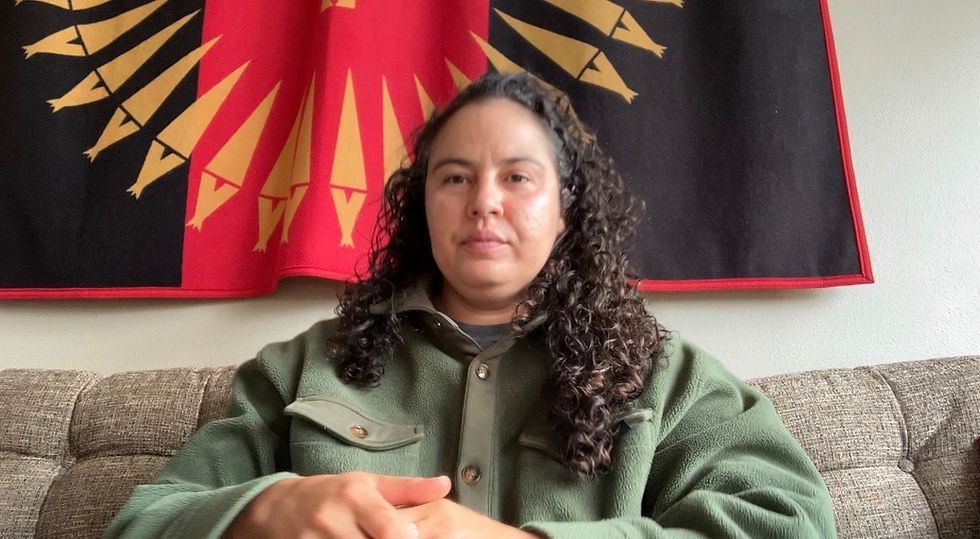
In this blog, we feature DRESS Syndrome survivor Dr. Shaquita Bell, who is a pediatrician based in Washington state. She brings the unique perspective of being a doctor who has had to navigate the U.S. medical system as a patient trying to get answers and, ultimately, recover.
1. When did you develop DRESS Syndrome, and what drug(s) is believed to have caused your reaction?
I was diagnosed with DRESS on April 27th, 2023, from carbamazepine.
2. How long did it take to get a diagnosis? Did you face challenges along the way?
I am very fortunate to be a physician myself, but I am a pediatrician. I remember starting carbamazepine for what we thought was trigeminal neuralgia. I was having pain on the right side of my face (later I realized that an oral surgeon had given me a shot of botox in my jaw muscle and that probably injured the nerve at the time.) The consequences of that procedure and later starting a medication to address the pain changed my life forever.
When my PCP gave me the prescription for carbamazepine, I remember thinking in the back of my mind how I learned in medical school that this medication causes DRESS (unfortunately, it also is a first-line treatment for trigeminal neuralgia). About 14 days later, I started having fevers, swelling in my lymph nodes, swelling of my ears, rashes all over, and feeling crummy. I was worried, so I called my doctor’s office; it was the weekend. I was told that it was a virus, but I pushed back. As a pediatrician, I have had dozens if not hundreds of viruses in my life and have treated thousands more. I knew in my gut this was not a virus. I knew that adults do not get full body rashes without serious reasons. So, the next day (Monday) I went in and requested blood work. I was given a tentative diagnosis of DRESS and sent home with referrals to Allergy and Cardiology (because my EKG was not normal).

When I tried to call the Allergy office, they said I had to see Dermatology first (which I didn't have a referral for). When I called Cardiology, they said they could see me in four months. I sort of broke down and told the person on the phone that I might be dead in four months, and she told me, "Well, everyone who calls here has a good reason." That was a very salient moment for me. I realized that the only way I was going to survive was to take complete control over my health.
So, I pulled the "I am a doctor" card and started calling my friends who were doctors. I got in to see a dermatologist that a friend knew, who was willing to squeeze me in the next day, Dr. Eliza Notaro. She did a RegiSCAR on me and a skin biopsy. In my opinion, she saved my life. She immediately came up with a plan and got me on steroids before I left the office.
Later when my DRESS was not improving on high-dose steroids, she also started me on cyclosporine. I think both of those decisions saved my life, both in the moment and long term. I think my success and survival was due in large part to cyclosporine and the relative quickness of it being prescribed.
Part of my success was having the wherewithal to take time off work/work from home. I also had a partner with an incredibly flexible schedule who could take me to daily blood draws and days with multiple visits at multiple locations.
There were so many times in the course of my illness that I saw the healthcare system break down ...
Having that initial call and visit with no answers
Being sent home with all of the work on my shoulders
Needing a hepatologist and no one would call me back
Needing labs and the lab said they couldn't draw the blood because they didn't know how to do the test
Filling out special paperwork with my pharmacy to get the cyclosporine
I remember another time that I went to the ED for chest pain. At the time we knew that my liver enzymes were elevated. One of the doctors tried to give me a medication that no one should take when they have liver disease. In fact, taking this medicine could have been fatal. I knew of this outcome because I'm a doctor and stopped the administration. That was a really scary moment.
3. What has your recovery been like, and are you managing any long-term effects?
I feel very fortunate and forever changed. Through recovery, I dealt with a lot of side effects from the steroids for several months after stopping. I gained over 25 pounds. I had such severe immunosuppression that I had to avoid people/outdoors and take medicine to prevent secondary infections. I had signs of kidney injury from the cyclosporine. I had trouble with my cholesterol and blood sugar. I couldn’t sleep.
Being a physician came in handy — I was already aware of the potentially devastating side effects that the "treatment" could inflict. But, I was never explicitly sat down and warned about what high-dose steroids and cyclosporine could do to me (In all due credit, we were focusing on preventing death.), so I did extensive research using tools and journals available to me as a doctor. I strictly followed an anti-inflammatory diet, which I still adhere to. I no longer drink any alcohol.
Now more long term, I continue to have issues with my immune system (there is no unifying diagnosis yet). I have had a couple of other rare conditions (Raynaud’s, post-polypectomy syndrome, several serious bacterial illnesses, unexplained rashes). And I have some masses that my doctors are monitoring. I went from someone who had a primary care doctor she saw maybe once a year to having a team of 7–8 different doctors all working together (primary care, allergy, immunology, gynecology, GI, ID, Neurology, and I graduated from endocrine eventually).
Maybe most of all — which took me a long time to realize — I had a lot of mental-health side effects. I have struggled with severe anxiety since being diagnosed with DRESS. There was certainly the "am I going to die" of it all, but I also now have a ton of anxiety around health/medications/travel. I have been in therapy, starting a little while after the diagnosis. It has been a long road, and I still have some really bad days. Knowing that I am not in this alone is enormously helpful. Connecting with other DRESS Syndrome survivors is incredibly helpful. And having a very supportive spouse who talks through things, makes plans and comes to appointments has helped me manage the anxiety a lot, too.
4. What do you want the general public to know about DRESS?
Ironically, this answer changes all of the time.
I wish people knew how isolating, scary, and hard having DRESS is. How every medication has a side effect and should be seriously considered before taking. How not everyone who has a potentially deadly illness has symptoms you can see on the outside. That once you have had DRESS, you will question every single thing that enters your body, even supplements. That it's never truly over "but you're all better now, right?"
I wish doctors would take it upon themselves to learn more — I cannot tell you how many healthcare providers I have seen who clearly don't know what DRESS is and don't try to understand it. Many of them just blow right past it or make comments about how "you couldn't possibly have this many allergies." Rather than having a conversation with me to understand that it is not allergy in the way they are thinking — but in a healthcare system that is hell-bent on keeping people sick — it's a safety measure to prevent a serious and rare drug reaction that could end my life.
5. What has surprised you about having DRESS Syndrome?
While I was actively sick, I was so focused on surviving day-to-day that I never considered how much this would shape the rest of my life, both personally and professionally. My health has become a much broader piece of my near daily awareness. From exercise and healthy eating to the multiple doctors appointments I have to schedule/navigate during the week. I am still surprised how few people know about DRESS. I sort of understand the everyday person not being familiar, but nearly all of the people I work with are in healthcare and are unfamiliar. Whenever I speak at events (which is mostly to other doctors), I always take a moment to talk about DRESS and connect them with educational and advocacy resources.
6. How has having DRESS changed the way you approach medications and medical care now?

Ironically, having DRESS changed a lot about how I practice medicine myself.
I continue to struggle with the vast dysfunctional systems, but on an individual level, I have found ways to create a practice that is much more about connection than transaction:
I share my personal journey (when appropriate).
I have long conversations about a medication’s possible consequences (both good and bad).
I try to help people navigate care with specialists and other providers. Offering tips and tricks, when to call, what to ask for — empowering them to ask for what they want and need, and the open door to come back and let me know if they need more from me.
7. Do you have advice for people who are newly diagnosed?
For those of you who are newly coming to this diagnosis, you are not alone. People have done this, are doing this, and we may be your greatest resource. Think about making connections with organizations like the DRESS Syndrome Foundation. Help connect your family and friends with information, so they can walk alongside and support you. When going to appointments, write down all of your questions so you don't forget, and don't apologize for asking. If possible, bring a partner or trusted individual to appointments who may remember questions you forget. Be kind to yourself. And fight like hell for the care that you deserve.
****
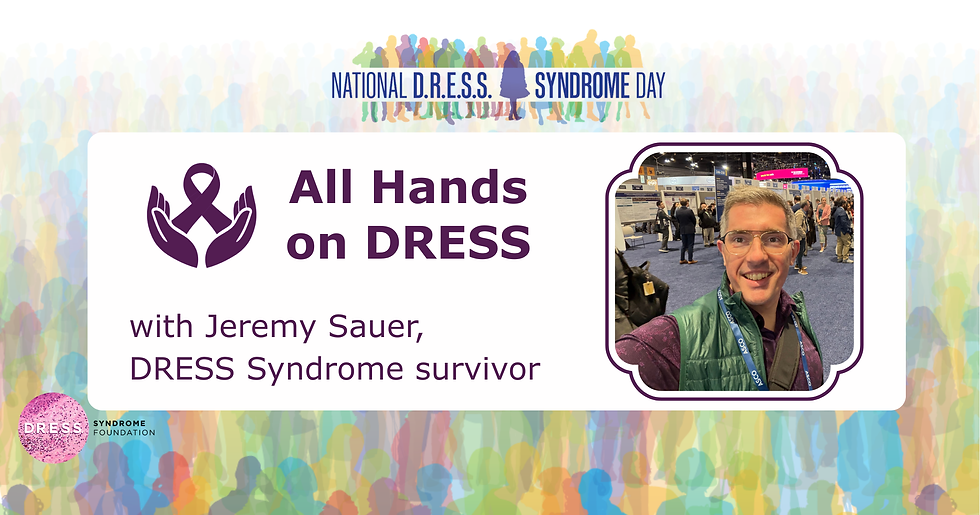
"All Hands on DRESS" is a call to action urging federal legislators to dedicate research funding to severe cutaneous adverse reactions (SCARs) like DRESS Syndrome. To date, zero FDA-approved therapies exist and no dedicated research funding is in place to help researchers better understand SCARs.
You can take action to help empower these efforts:
Sign our petition to Congress, NIH, and FDA that urges for this funding.
Write your members of Congress demanding that they take action to fund SCARs research.
Read about Jeremy Sauer's experiences with DRESS Syndrome.
Share these blogs with your community and help spread DRESS awareness.

One small act can collectively turn into a movement.
Together, we have All Hands on DRESS!

Không gian trình bày gọn gàng cũng giúp người đọc tập trung vào thông tin chính. Khi các kết quả được sắp xếp hợp lý, việc tìm kiếm một kỳ cụ thể sẽ không còn mất nhiều công sức. Đây là điều mình thấy khá hữu ích khi theo dõi xsmn và cần xem lại dữ liệu của những ngày trước.
Spent a couple hours on Pokiig last week going through the puzzle section. A few of the games were more engaging than I expected — kept telling myself one more level and then lost track of time.
As browser gaming develops, Free Games are evolving into a more useful kind of online entertainment. More creative game concepts, better graphics, and more fluid gameplay might result from advancements in internet technology. Players seeking a variety of conveniently available entertainment may find the Free Games area of Coolgamesfree interesting.